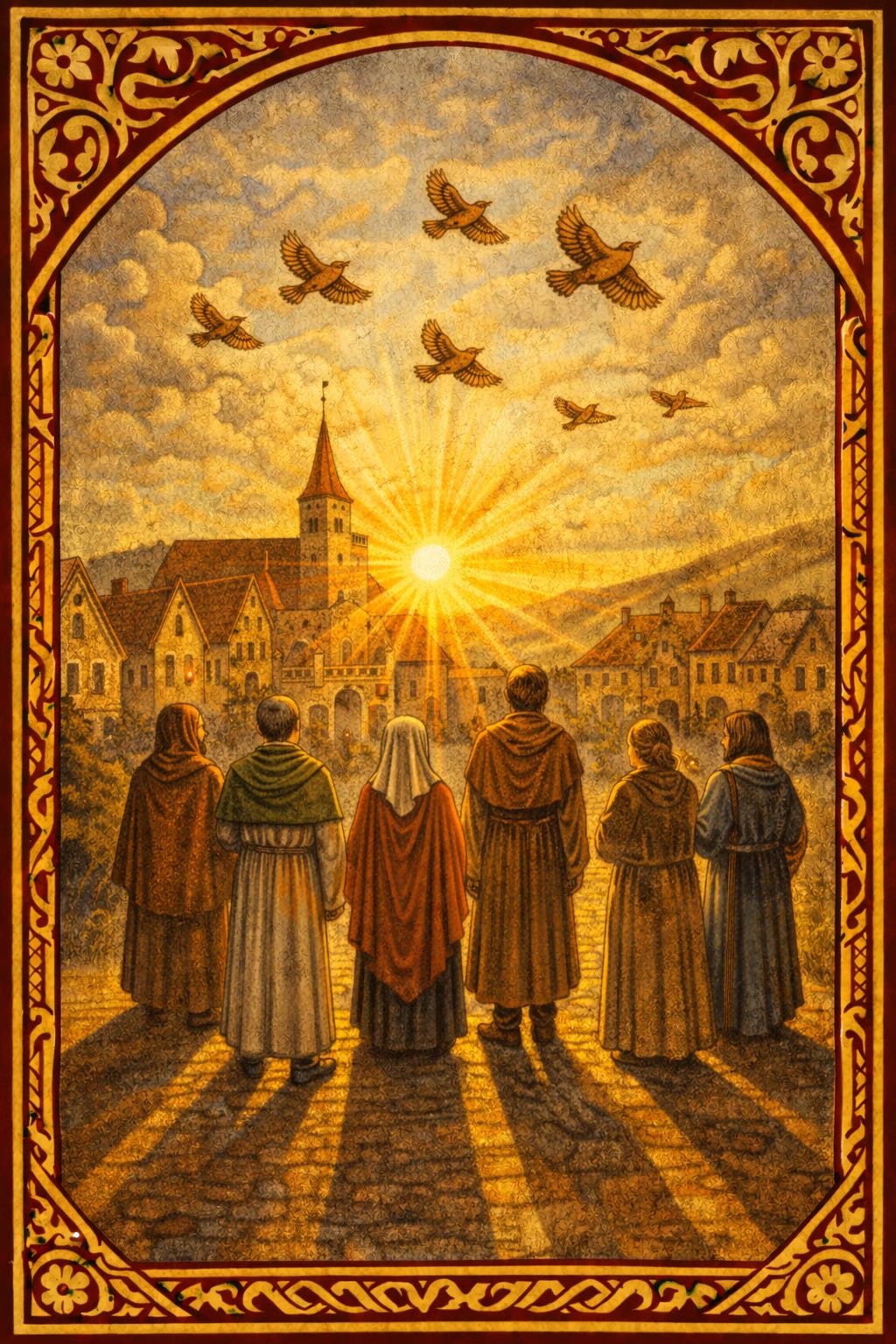
Celebrating Wren’s Day
Reclaiming the Spirit


St. Stephen, accused and condemned by the Sanhedrin, stood alone yet unwavering, his eyes fixed on the heavens as betrayal and injustice surrounded him. The first Christian martyr, he bore witness to truth and courage in a world structured to silence the small, the overlooked, the faithful.
December 26th, Wren’s Day, echoes this moment. The wren—small, clever, and crowned king by cunning—is a symbol of subtle deceit, hidden forces, and the vigilance required to confront them. Just as Stephen faced the Sanhedrin, spiritual seekers must navigate a world full of unseen obstacles, maintaining courage, discernment, and alignment with divine truth.
We celebrate the wren not for mischief itself, but for the lessons it teaches: vigilance, insight, and the triumph of light over hidden deception. This is the call of Wren’s Day, the same call that guided Marguerite Porete, Mary Magdalene, and all who bear the light of divine love in the world.
Modern events, such as military strikes or sudden crises, remind us that the world is full of unforeseen threats and subtle dangers. Just as St. Stephen faced betrayal and the wren represents hidden mischief, these events call for vigilance, discernment, and courage in how we respond. Wren’s Day teaches that the soul must navigate a world of complex forces with clarity, refusing fear or rash action to guide spiritual decisions. The lesson is not political, but spiritual: maintain awareness, act with integrity, and protect what is sacred.
The Hunt, the Wren, and Saint Stephen
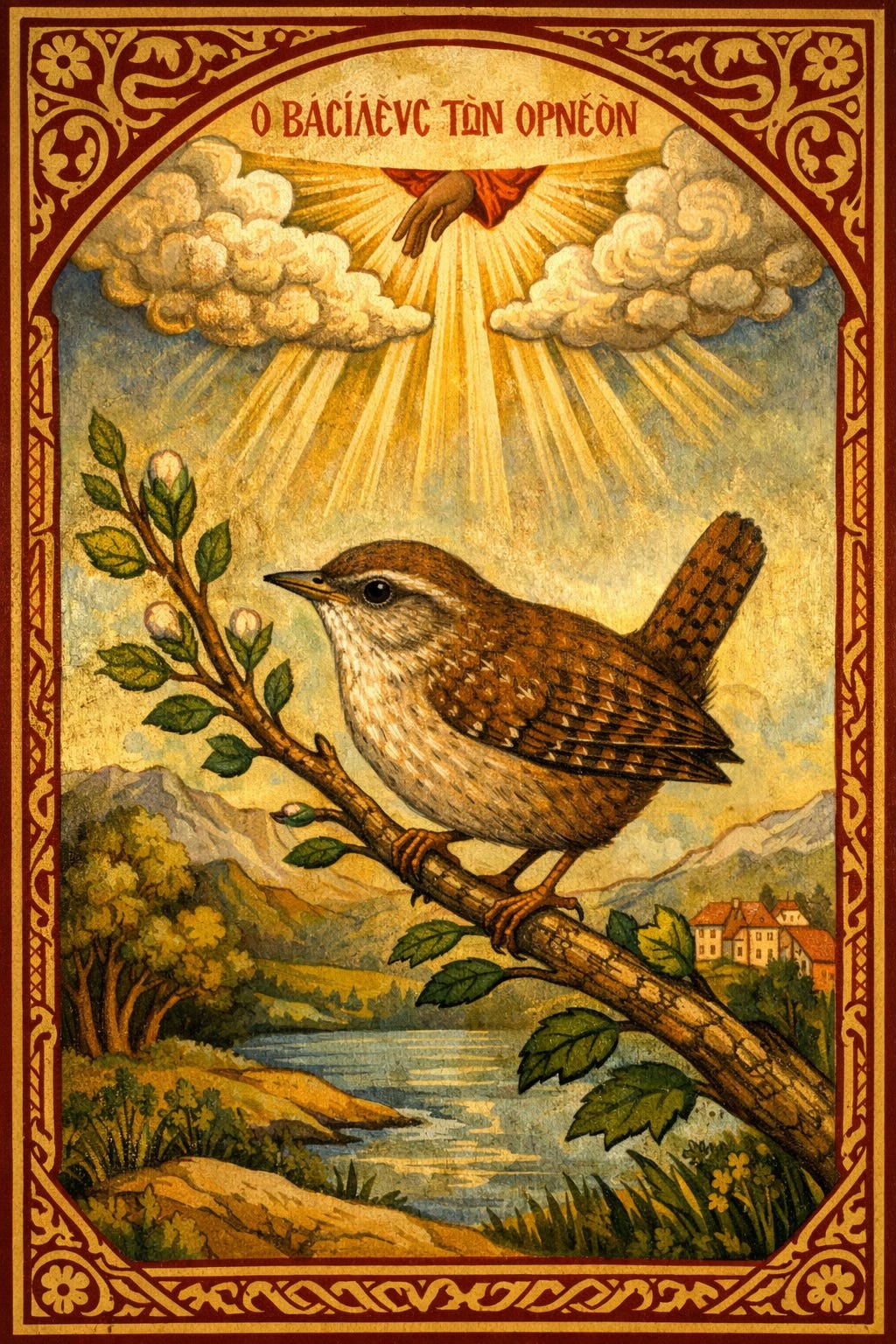
The wren, though small, has long been considered “the king of birds” for its cleverness and vigilance. Hunting the wren was a symbolic ritual:
In Celtic tradition, it symbolized justice and vigilance, confronting hidden forces.
In Christian adaptation, the wren represented hidden sin and betrayal, reminding communities to face what is overlooked.
The hunt itself—a capture, parade, and ultimate honor—reflects acknowledgment and transformation.
St. Stephen, the first Christian martyr, embodies similar principles:
Witness beyond power: Like the wren, the seemingly small and powerless can bear profound testimony.
Confronting authority: Stephen’s courage before the Sanhedrin mirrors the symbolic hunt—exposing hidden truth and standing for justice.
Sacred sacrifice: The ritual parallels martyrdom, a reminder that divine work demands courage, risk, and witness.
Behold, I have set before thee this day life and good, and death and evil.
Deuteronomy 30:15
The Annihilated Soul
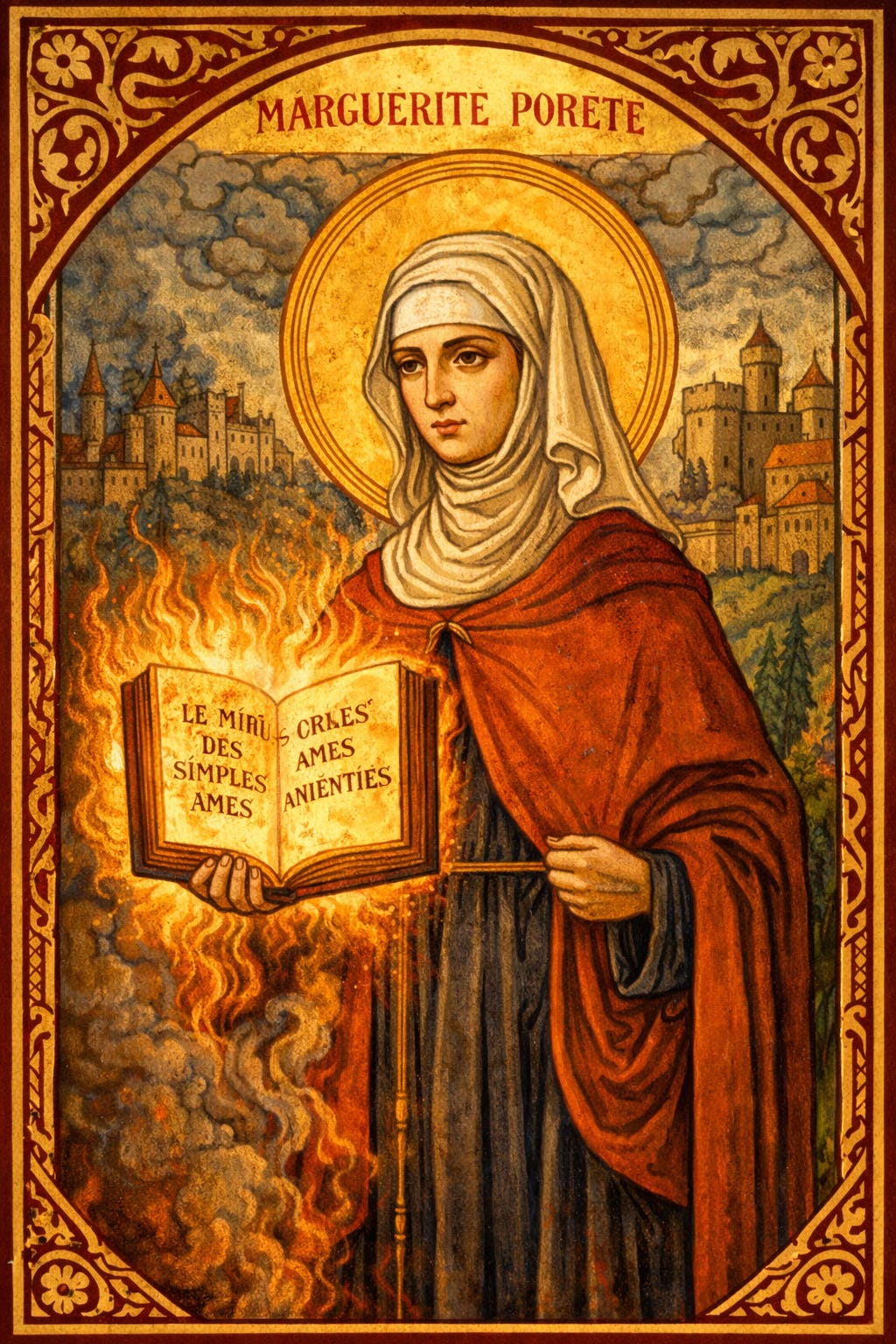
In the 1290s, Marguerite Porete authored The Mirror of Simple Souls, a mystical text written in Old French so that ordinary people could engage with it. Her radical claim:
The soul, fully united with God, surrenders entirely to divine love, transcending moral, ritual, and institutional constraints.
The Church condemned fifteen propositions from her book, including:
No need for sacraments or ritual.
The annihilated soul cannot sin and acts solely according to divine will.
Moral law and institutional authority are unnecessary for union with God.
Marguerite’s trial was not only theological—it was fear of spiritual autonomy. She exemplifies what Kierkegaard calls the leap of faith: surrendering to God’s love, defying rational comprehension and social expectation.
Witness, Creativity, and Radical Freedom
Mary Magdalene stands not only as a witness to the Resurrection but also as a companion of highly creative and spiritually inspired individuals. Her life exemplifies the intersection of direct divine encounter, courage, and collaborative inspiration. She did not operate in isolation; her witness and ministry were intertwined with other devoted and imaginative spirits who shaped early Christian understanding.
Key aspects of Mary’s spiritual and creative significance include:
Direct encounter with the divine: Mary’s revelation came personally and vividly, independent of institutional authorization. Her experience illustrates that authentic spiritual insight often emerges alongside imaginative and inspired companions, not through formal hierarchies.
Collaborative inspiration: Mary’s relationships with Jesus and other spiritually attuned followers demonstrate the amplifying effect of shared creative and mystical insight. She nurtured and was nurtured by those attuned to the Spirit, reflecting the communal dimension of divine freedom.
Radical freedom and courage: Just as Wren’s Day celebrates vigilance and liberation, Mary’s bold proclamation of the Resurrection defied societal and religious constraints, embodying freedom in action.
Symbol of imaginative witness: By keeping company with visionary and creative souls, Mary represents the potential for all spiritual seekers to co-create understanding, ritual, and insight, enriching the life of the soul and the community.
Mary Magdalene’s example reinforces that divine authority and insight flourish among those who are both courageous and creatively inspired. Her life models the principle of Absurd Grace: salvation and authentic witness arise not from conformity or hierarchy but from fearless engagement with God and communion with imaginative, spiritually attuned companions.
Woman, why weepest thou? Whom seekest thou?
John 20:15
Limits on High Ground & Mental Ascent
Absurd Grace teaches that divine love is unconditional, paradoxical, and overflowing. Thinkers like Kierkegaard, Leibniz, and Lewis illuminate this:
Kierkegaard: Faith requires a personal, risky leap.
Leibniz: Apparent contradictions reveal a higher divine harmony.
Lewis: Love transforms the heart; obedience flows from grace, not fear.
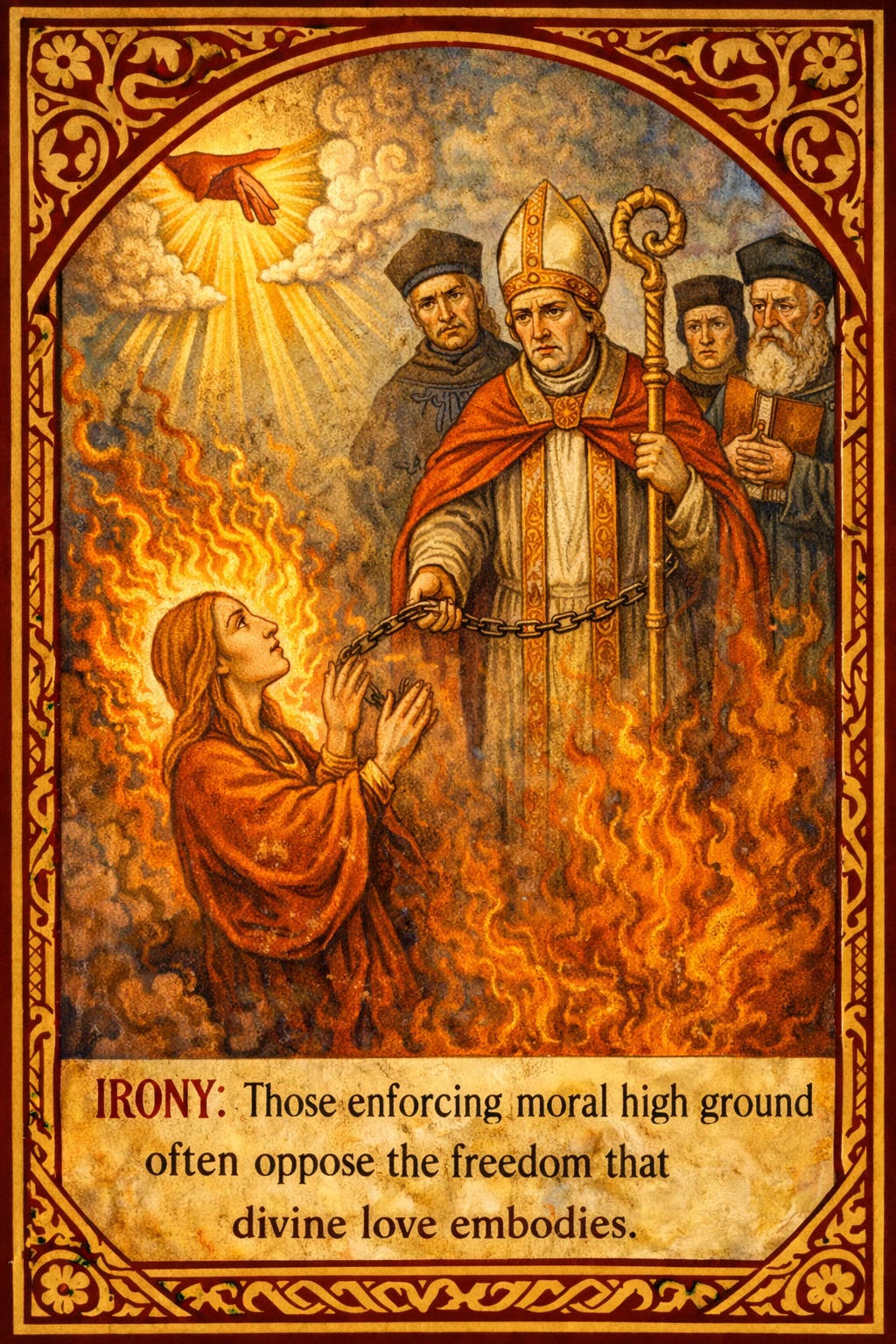
Moral high ground alone is insufficient. It is not a matter of mental ascent or intellectual superiority. Compliance without love produces obedience, not liberation. Institutions enforcing morality often create spiritual slavery, not freedom. True salvation emerges through:
Embodied surrender: The whole soul, heart, and will must align with God.
Relational courage: Faith is lived in interaction with others, in protection and service, not isolated reflection.
Active discernment: Awareness and vigilance are exercised in the world, not only in thought.
“It is not by might, nor by power, but by my spirit, saith the LORD of hosts.” (Zechariah 4:6)
Freedom vs. Institutional Slavery
Institutions often enforce moral agendas as tools of control, creating fear and conformity. Marguerite and Mary were silenced to maintain hierarchy. Divine love, however, is liberating:
The annihilated soul acts freely in alignment with God.
Grace is a gift, not a reward.
Courage, surrender, and ethical love lead to true salvation.
“Behold, I have set before thee this day life and good, and death and evil.
Deuteronomy 30:15
Charles Spurgeon: Spirit Over Legalism
Charles Spurgeon reinforces these principles:
“It is not in outward conformity or human ordinance, but in the quickening of the Spirit that the soul finds life; where the law binds, grace sets free.”
Spurgeon’s insight connects directly to Marguerite and Mary:
Spiritual authority is found in the Spirit, not institutions.
Legalistic morality cannot grant salvation.
True life emerges from courageous surrender and direct encounter with divine love.
Spurgeon’s words serve as a bridge between historical examples and modern practice, emphasizing that obedience to rules is not equivalent to living in freedom.
Wren’s Day Ritual: Reclaiming the Spirit
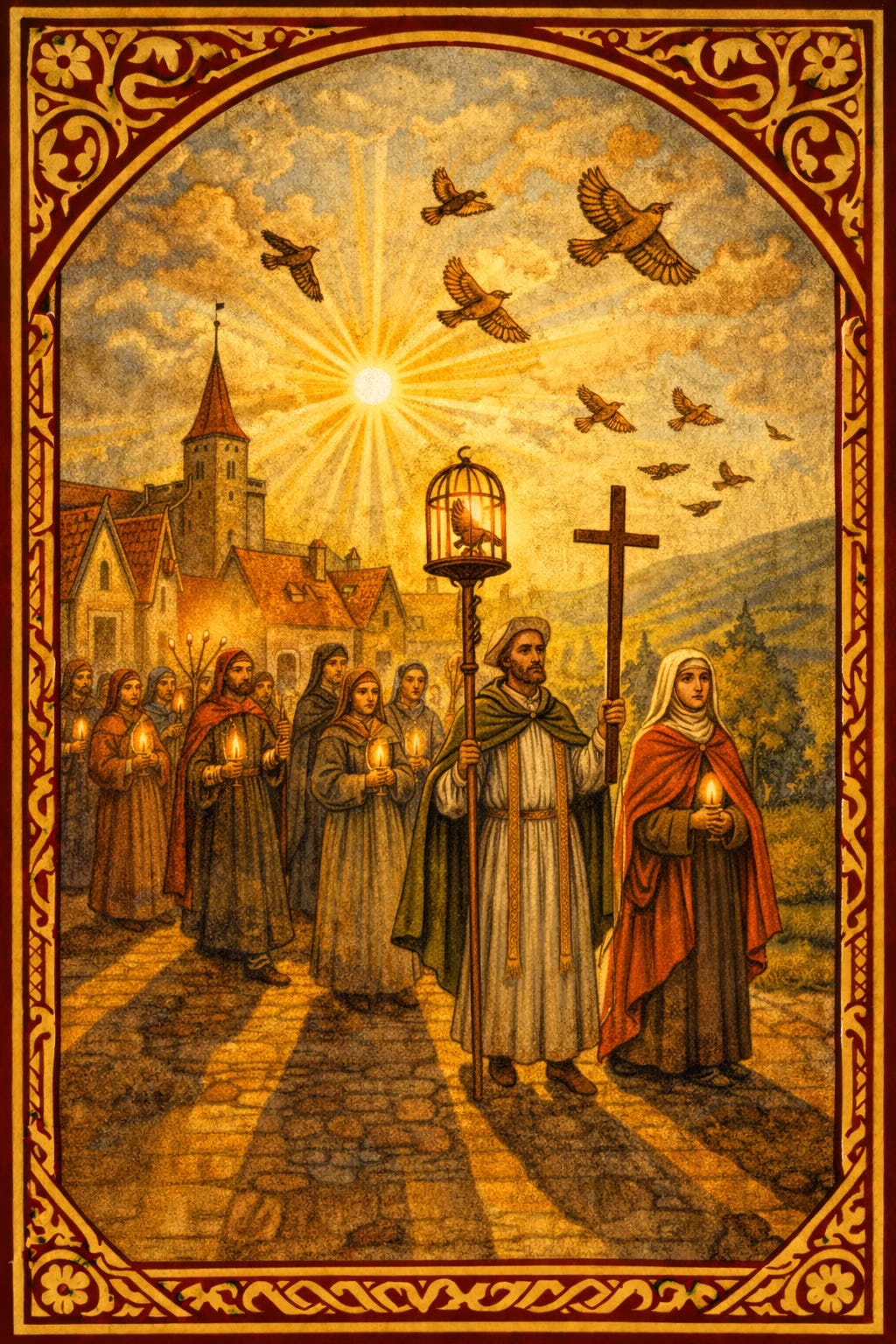
Imagine a square alive with presence, echoes of courage through centuries. The wrens rise—small, vigilant, symbolic of hidden truth and divine witness. Marguerite walks among us, her charred book glowing. Mary Magdalene lifts her head, sunlight tangled in her hair.
Hands lifted in love reclaim spiritual autonomy.
Steps echo courage, affirming that law, hierarchy, and ritual are not the source of grace.
Silence becomes witness; devotion becomes unmediated.
Practical Guidance for Today
Trust Direct Encounter with the Divine – Your intuition, reflection, and heart are valid sources of spiritual insight.
Question Authority with Discernment – Institutions can guide, but cannot define salvation.
Embrace Absurd Grace – Freedom, forgiveness, and love are gifts to receive and share.
Elevate Marginalized Voices – Ensure historically silenced perspectives shape our assemblies.
Own Ethical Responsibility – Freedom carries weight: act with courage, love, and integrity.
Mary Magdalene’s Circle: Creative and Courageous Companions
Mary Magdalene’s circle exemplifies how spiritual insight flourishes in community. Her companions contribute uniquely to the unfolding of divine understanding, forming a network of support, creativity, and courage.
Key aspects of her circle:
Collaborative Spiritual Creativity: Each companion brings distinctive perspectives that enrich Mary’s witness, producing collective amplification of insight.
Mutual Courage and Support: Facing institutional authority or societal expectation is perilous. Companions provide encouragement, strengthening spiritual courage.
Embodiment of Absurd Grace: Grace is realized in relational, communal contexts, not only individually.
Co-Witnessing and Ethical Agency: Companions actively participate in transmitting divine truth, showing that spiritual authority and responsibility are shared.
Creativity as Spiritual Practice: Through art, dialogue, ritual, and imaginative insight, companions demonstrate that creativity is a sacred conduit for divine encounter.
“Two are better than one; because they have a good reward for their labour.
Ecclesiastes 4:9
Husbands: Annihilation in Service of Light
In the spiritual order, husbands are called to annihilation of self—not out of cowardice, judgment, or domination, but as an active spiritual strategy to protect and guide the divine daughters, the Pleiades of God. Each woman is a royal daughter of the Most High, a star in the celestial tapestry, and men are entrusted with guarding their freedom and spiritual light.
Key principles:
Self-emptying as protection: Annihilation of self allows men to act decisively in support of the spiritual flourishing of others.
Engagement, not inaction: True protection requires action; it is not passive waiting but courageous, strategic engagement with reality.
Alignment with divine order: By surrendering personal will to God, men ensure that their actions serve eternal purposes, not transient authority or ego.
Preparation for rapid spiritual shifts: History and spiritual currents can move swiftly; annihilation equips men to stand firmly on the side of light and freedom, avoiding alignment with oppressive forces.
Lift up your eyes on high, and see who hath created these things…not one faileth.
Isaiah 40:26
Surrender, Loss, and Consequences
Men often “tap out” when faced with overwhelming spiritual, relational, or social pressures—especially in contexts where they are called to lead, protect, or uphold divine light. Tapping out is a relational and spiritual surrender, with tangible consequences:
Loss of spiritual agency and authority in guiding divine daughters.
Diminished capacity for courageous action when history or spiritual pressure accelerates.
Interrupted co-creation of grace and relational insight, weakening community and spiritual flourishing.
Disconnection from divine alignment, as self-withdrawal limits transformative engagement.
The Lord is my strength and my shield; my heart trusted in him, and I am helped.
Psalm 28:7
Freedom, Courage, and Absurd Grace
This article has explored the interwoven themes of spiritual freedom, courage, and radical love, expressed through historical and mystical examples:
Marguerite Porete exemplifies surrender to divine love, resisting institutional control, and showing union with God transcends ritual and law.
Mary Magdalene and her circle demonstrate the power of creative, courageous companionship, where spiritual insight is nurtured and amplified.
Men’s roles are defined by radical self-emptying and guidance, safeguarding divine daughters while confronting spiritual opposition.
Tapping out represents spiritual and relational withdrawal under pressure, highlighting the cost of surrendering courage and agency.
Wren’s Day celebrates vigilance, freedom, and the courage to act as light-bearers in a constrained world.
Absurd Grace, informed by Kierkegaard, Leibniz, and Lewis, shows that salvation and true freedom emerge through surrender, courage, and alignment with divine love.
The overarching lesson: freedom, love, and grace are lived through courageous action, self-emptying surrender, and relational creativity, rather than through institutional hierarchy or moral posturing.
A Wren’s Day for Freedom
Wren’s Day celebrates vigilance, courage, and spiritual freedom. Honoring Marguerite Porete, Mary Magdalene, and all who embraced divine love over institutional control reminds us:
Salvation is not moral posturing; it is lived, embodied, and courageous.
Freedom is divine, not granted by hierarchy.
Grace is absurd, unstoppable, and overflowing.
As the wrens rise, so must we—bold, unbound, and aligned with divine love.